Roofing index / 13
Roof drainage & water management
A roof needs a clear route for water all the way to a suitable discharge point.
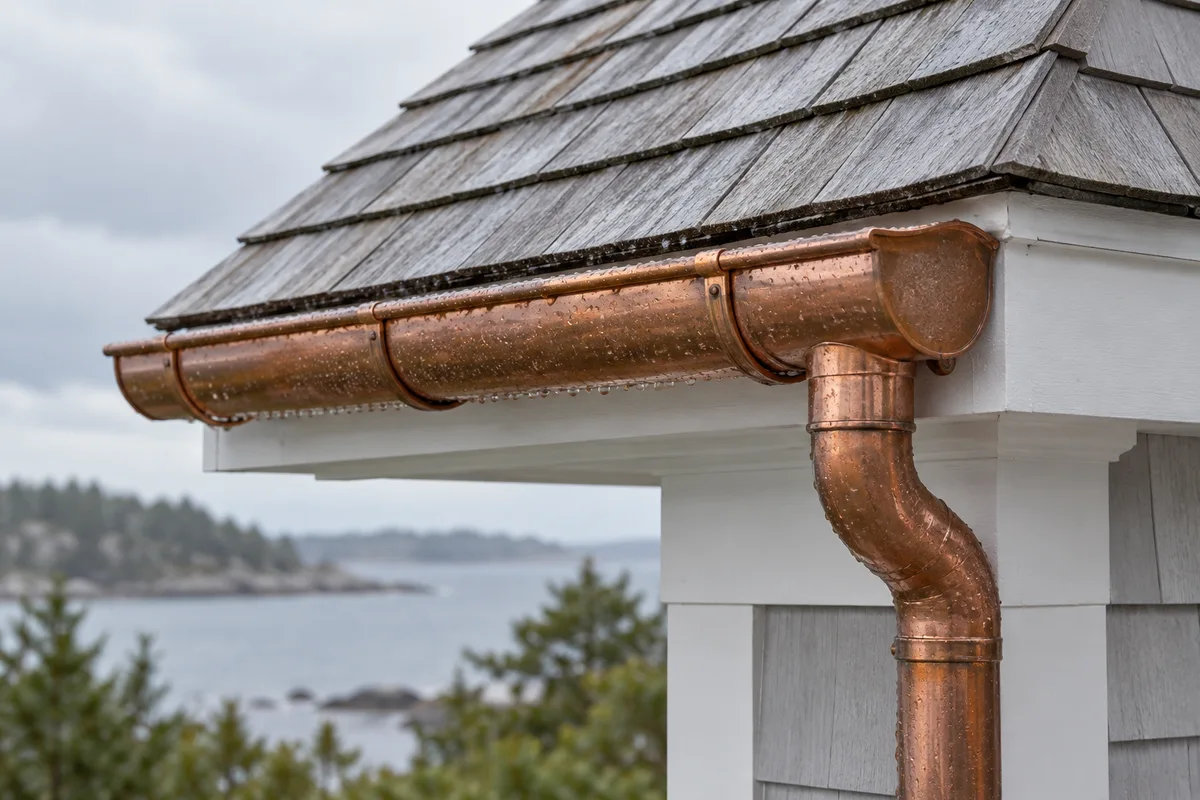
Follow runoff from ridge to ground
On pitched roofs, valleys concentrate water before it reaches gutters or eaves. Undersized, obstructed or poorly positioned drainage components can send runoff behind the fascia. Check valleys and drip edges as part of the same water path instead of treating every wet soffit as a shingle problem.
Low-slope roofs still need drainage
Standing water can signal obstructed outlets, inadequate falls or structural deflection. Flat and low-slope roofs require intentional routes to drains, scuppers or gutters. Changing drainage can affect the broader assembly, so proposed corrections should consider insulation, deck conditions and overflow provisions appropriate to the building.
Repair the damage and its cause
Replacing a deteriorated fascia board without correcting overflow leaves the new material exposed to the same conditions. Soffit and fascia repair should include inspection of adjoining roof edges. Pair the work with debris management and investigate persistent interior staining through leak detection.
Explore property considerations for Southampton roofing & replacement planning and Bridgehampton roofs, from house to outbuilding, or see the full East End service territory.