Roofing index / 20
Flat & low-slope roofing
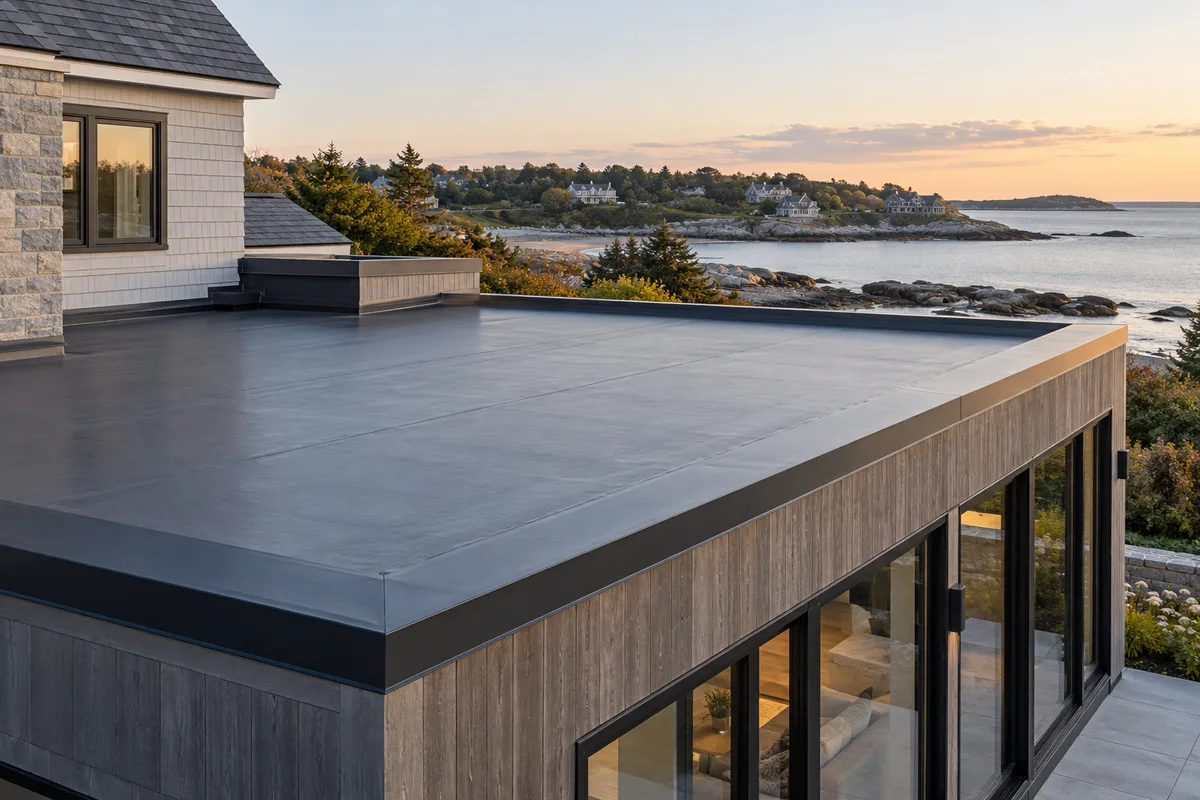
A low profile does not mean a simple roof. Water must leave slowly sloping surfaces through carefully planned routes.
01 / Considerations
Flat is a description, not a drainage plan
Low-slope roofs need falls toward suitable drains, scuppers or gutters. Persistent standing water deserves investigation of outlets, surface geometry and possible deflection. Drainage assessment should come before choosing a new covering, because changing the surface alone may leave the original problem in place.
02 / Considerations
Choose a system for the roof’s use
A commercial roof with equipment access has different demands from a small residential extension. Single-ply membranes and asphalt-based systems offer several approaches, but substrate condition, insulation, attachment and penetrations determine suitability. Check transitions where low-slope roofs meet walls or adjacent steep roofing.
03 / Considerations
Work from condition, not appearance
A tidy surface can conceal wet insulation, while a localized split may be repairable on an otherwise serviceable roof. Inspection and further investigation where needed help define the scope. Pair commercial roof planning with ongoing outlet and detail checks.
Explore property considerations for Shelter Island roofing & seasonal roof care and Roof repairs & drainage in Hampton Bays, or see the full East End service territory.